Glittering Grotto Cave
1960 (Part II) — by Stuart MacPherson
It was a lovely warm day and that morning I had clambered around the Oudtshoorn hillside, looking at openings and marvelling at Bushman paintings. I had hoped to find prospective cave entrances but nothing came to my notice. [I] now lay on my back in the farmer's field, near a rushing stream, enjoying lunch and persuading myself that an afternoon in the sun would be better for me than a couple of hours of Stygian darkness, bats and dust.
"Stuart, come on. Paul needs support — the rest are going with Jose." What a ridiculous suggestion, I thought, watching the utterer of these words stretched on his back, pipe in mouth, lazing in the sunlight. But not 20 minutes later I found myself donning overalls, adjusting my lamp and plunging into the bowels of the hills above.
I am not sorry I went, and I would like to tell you about my trip with Paul and Ralph into the 'Glittering Grotto'.
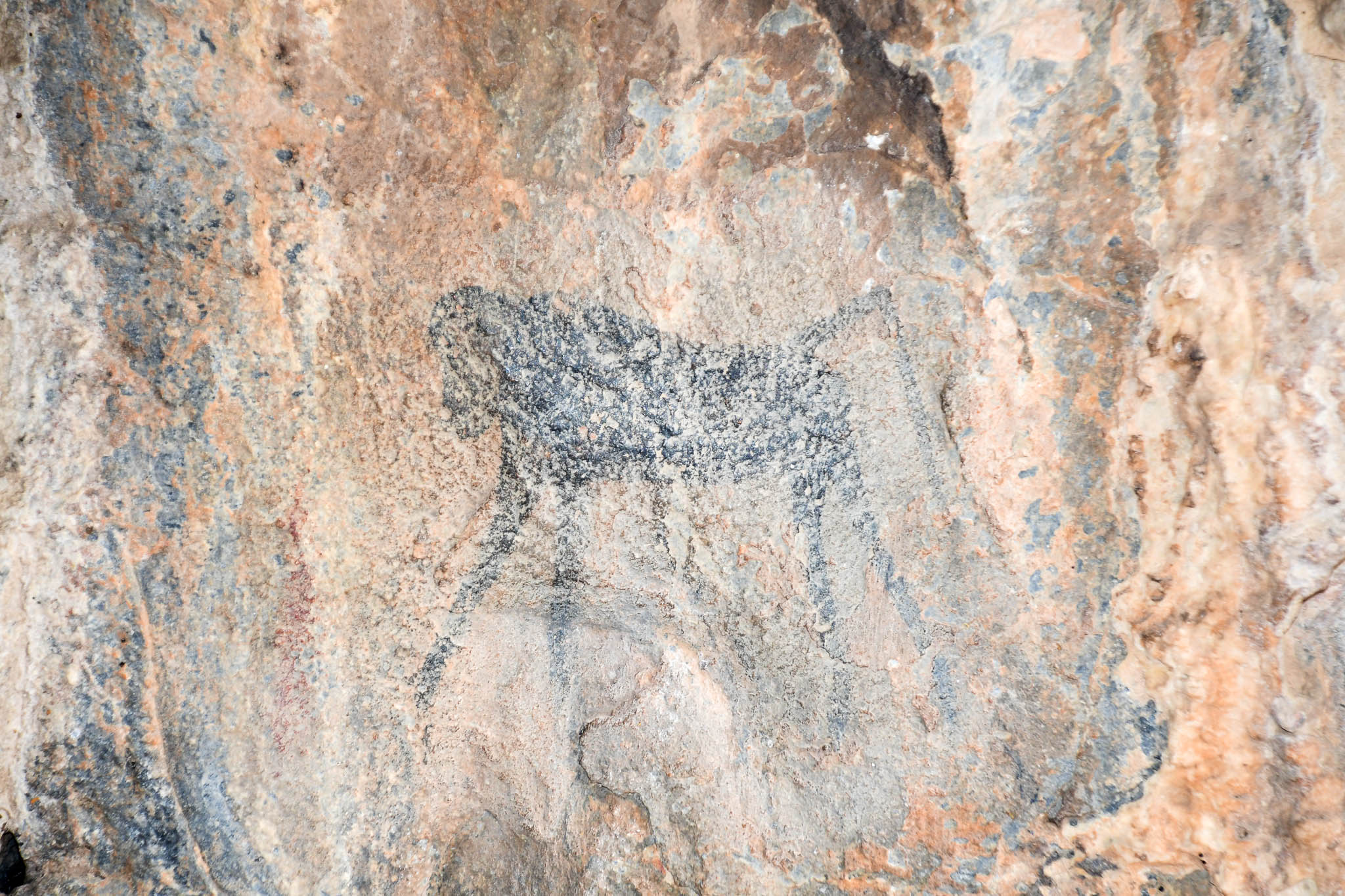
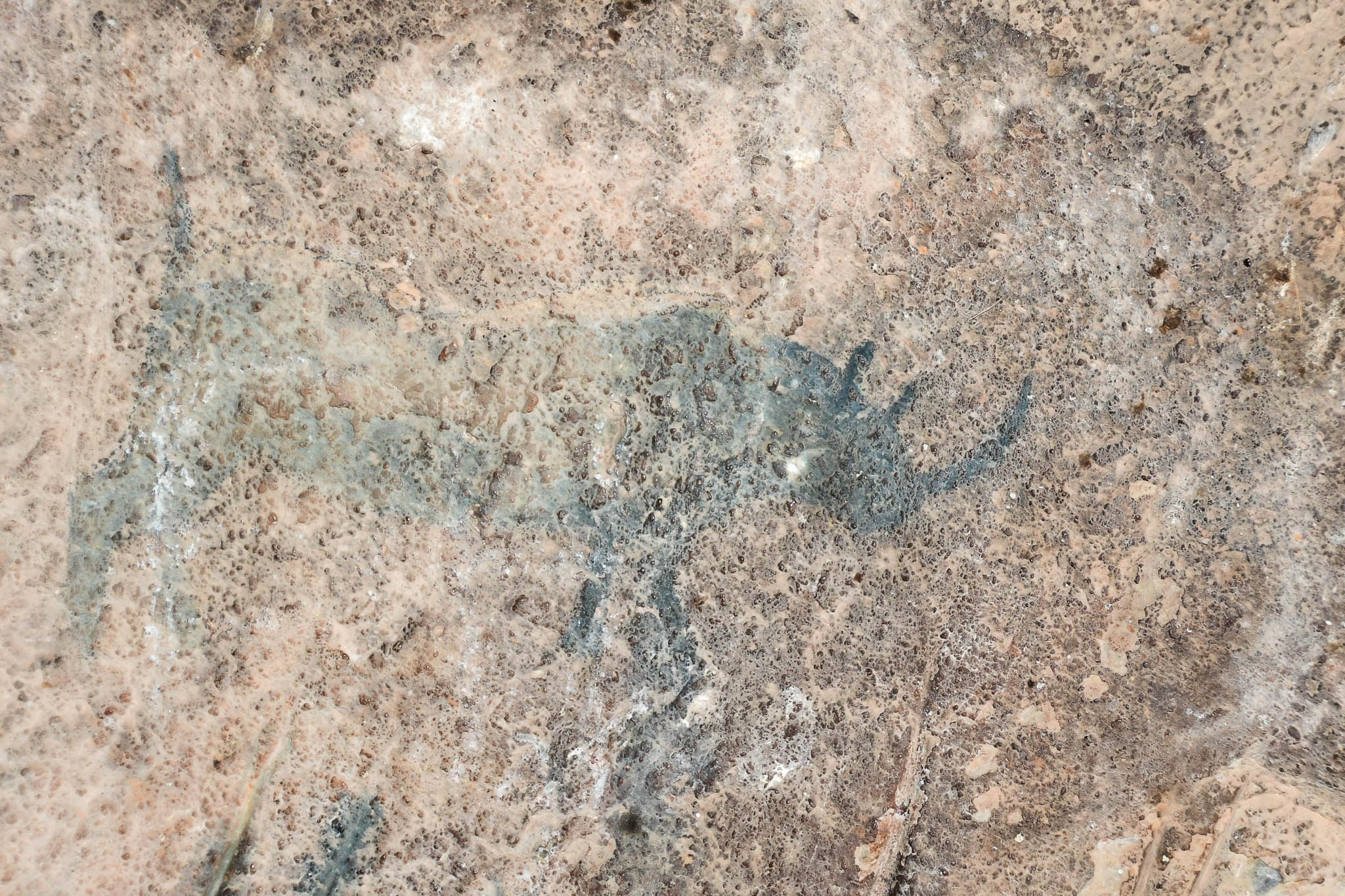
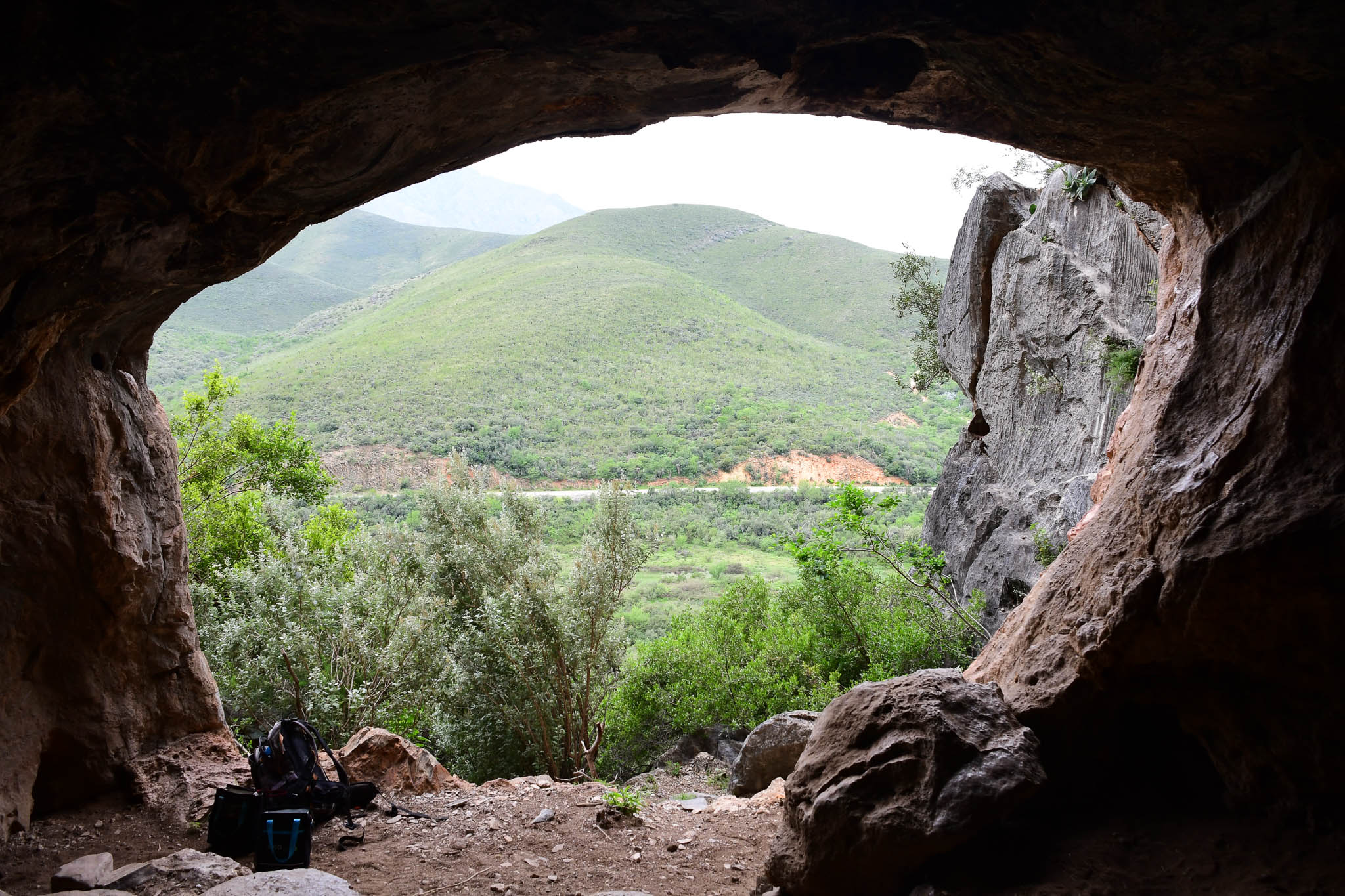
We left Jose and his happy band descending into their new cave by way of a steel-wire ladder, and continued up the hillside. We passed a yawning chasm which always looks so promising but usually disappoints. In the entrance was evidence of Bushman occupation, including paintings and blade-sharpening grooves. Implements were lying on the floor of the cave. At its entrance the cave mouth is about 25 feet wide and 10 high. It tapers to its rear and flowstone covers the far end. At its lowest section (about 18 inches high) you plunge through a small hole. The floor of the cave at this point is dry and dusty. The way goes down a vertical tunnel just large enough for an ample body, and after a 15 feet drop you go onto your knees and crawl through a tunnel. This disgorges you into a large chamber, about 40 feet high. The floor is damp and the odour foetid. Two decomposing porcupines lie under a heap of quills amongst the bat guano. Straight ahead is the way in, though on the right is a probable route up to higher regions. This will have to be tackled with equipment next time.
A handline is hanging down at the far end of the chamber and the other two climb up, with much struggling on the slippery mud slope. The initial take-off is 7 feet vertically, and being of short stature I could not pull myself up the nylon handline. I eventually tied three footholds in the rope and struggled up that way. At the top of this tiring little pitch is a column and beyond lies a similar chamber, oval in shape. We decided to call the first chamber 'Porcupines' Pot' and, after examining the black ooze in the next chamber, which could possibly swallow an unsuspecting human completely, we called the chamber 'Satan's Sinking Sands'. There might have been other considerations as well.
A traverse round the side and a strenuous climb up the other side brings you to another large circular chamber. It is also a black, uninteresting-looking place and there is evidence of the cave having been worked for the bat guano. How they must have struggled across the black pit and up the 15-feet vertical at the beginning! The third chamber would be approximately 20 feet in diameter and has tree roots in one wall. Unlike the other sands in the cave, that particular wall is red gritty soil and appears to be a filled-in fault.
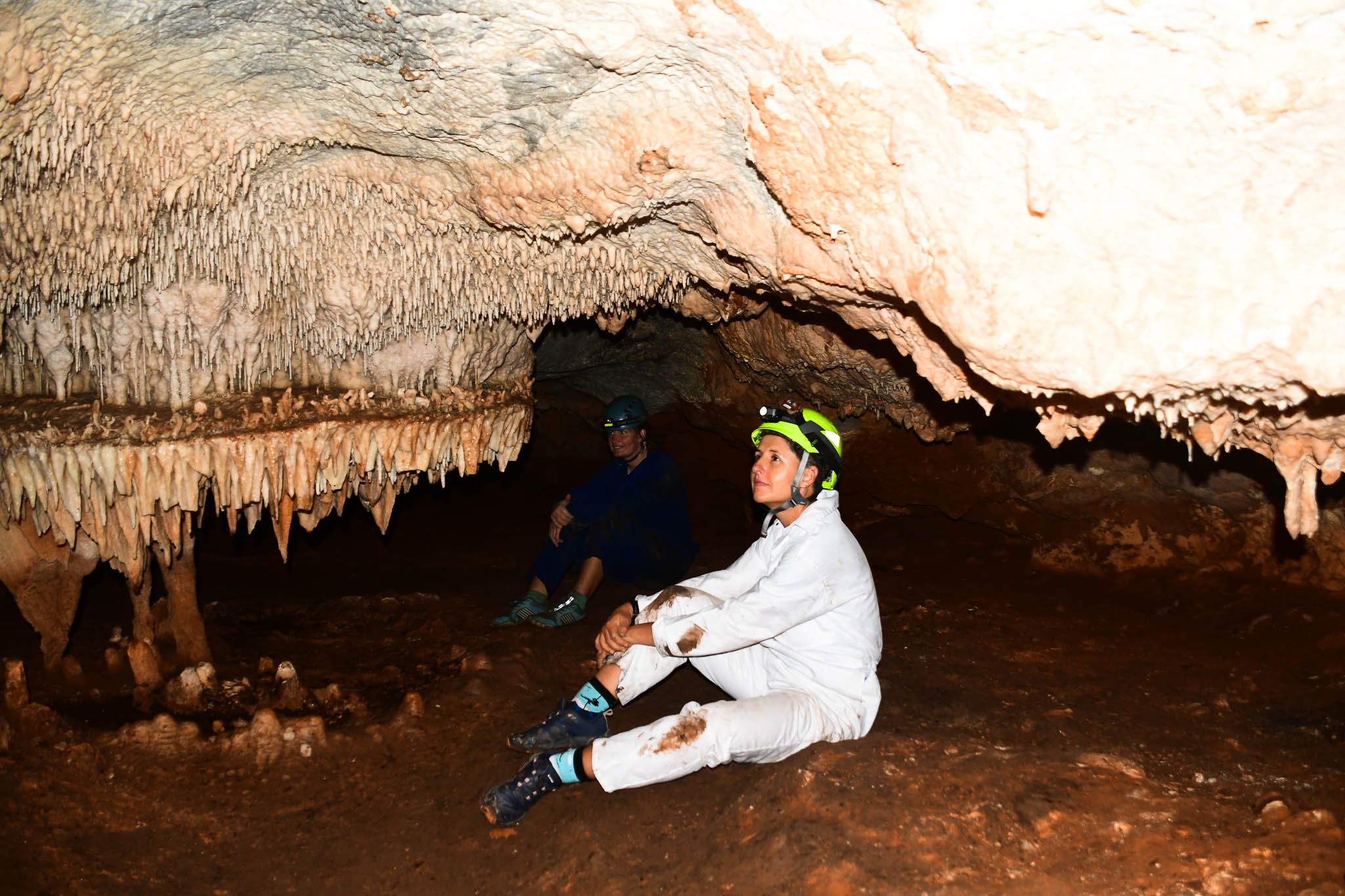
A narrow crawlway brings you face to face with the first formations, and on getting through the tight entrance to the fourth and final chamber, you behold a most magnificent sight. I would say that this cavern rivals Melville Pot for the beauty of its formations. The whole chamber is completely encrusted and the top end has some excellent rimstone gours. The whole is completely dry, and unlike most other formations in the Cango area, these are not so heavily stained with red iron oxide.
We stayed in this beautiful place for some considerable time examining all its wonderful facets, and both Ralph and I vowed we would come back with our cameras next time. The most outstanding formation is a giant palette and only seeing its texture and colour can possibly give a true picture of its infinite beauty. Underneath this, stalactites form beautiful curtains whilst on the shelf above, just below the roof, delicate helictites weave their irregular dance movements. Frozen forms, in perfect balance!
We sat in the Glittering Grotto enjoying the spectacle and Ralph and I each thanked the other for bullying him into giving up the sunshine for this experience. Paul sat by with a contented smile on his face; after all, it was he who had pushed this cave in the morning, and now he was enjoying the fruits of his labours.
The time came for the return so we wriggled out into the Cavern of the Dry Lake [?] and so past the Sinking Sands and the decaying porcupines. They must have fallen through the entrance and down the 15 feet shaft whilst escaping some foe. Carefully we examined the prospect of the upper storey and when we arrived back at the entrance to the 'Bushman's Cutlery Sharpening Cave', we vowed a return to this difficult but enchanting cave when next we visit the Cango valley.
Photos