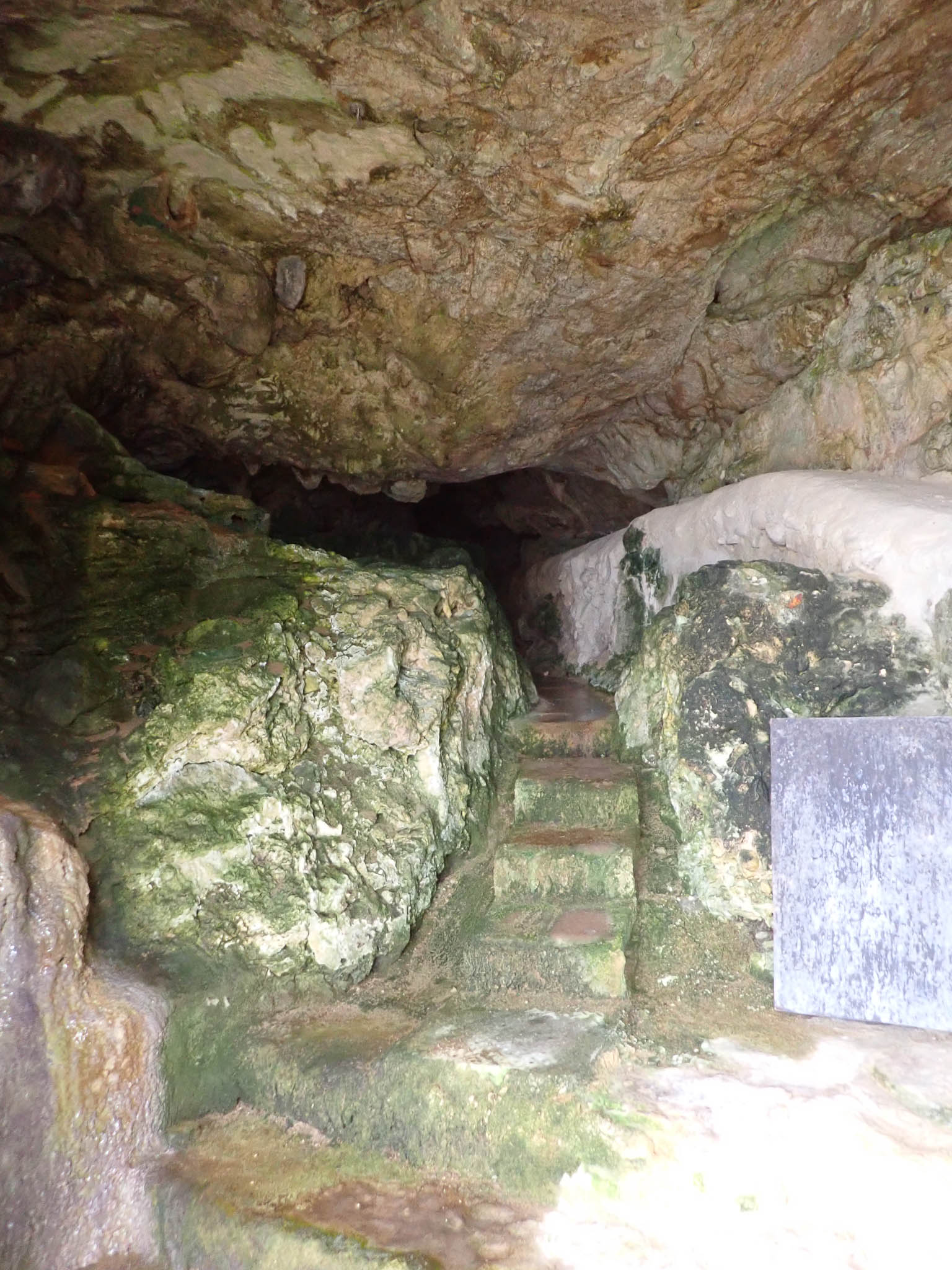
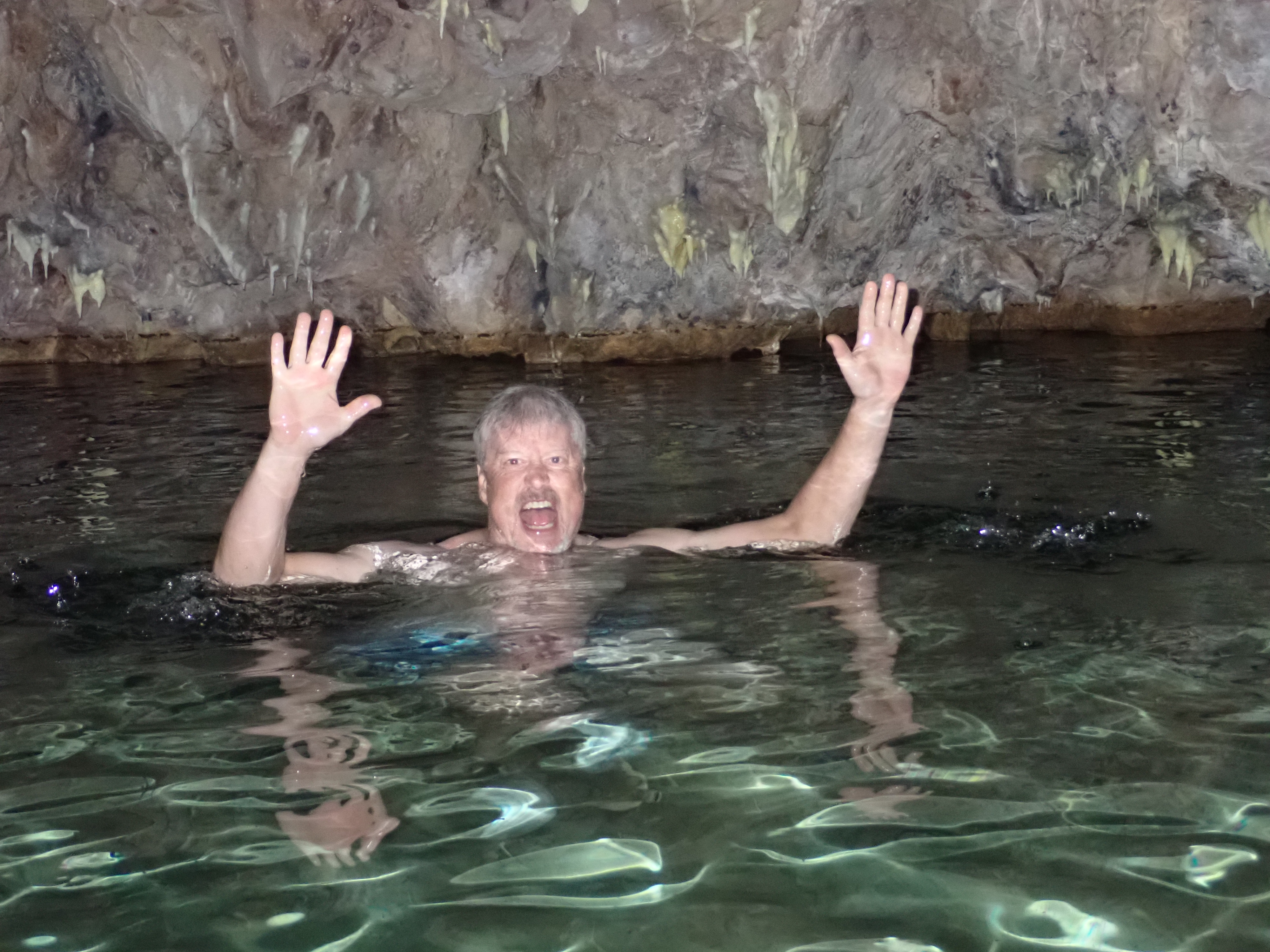
Die Kelders Cave
The following, one of the earliest accounts of caves in South Africa, is taken from the diary of Lady Anne Barnard, wife of the Colonial Secretary, Andrew Barnard. Mr. Barnard came out to South Africa in 1798, after the first British occupation, and as the Governor, Lord Macartney, was unmarried, Lady Anne Barnard became the First Lady in the Colony.
THE DRUP KELDER, (Now DIE KELDERS)
Tuesday, May 8th 1798
Having heard of a curious cave for petrifactions called the Drup Kelder, at five or six hours distance, although we had little expectation of finding it equal in beauty to some of our own in Derbyshire and elsewhere, yet, as it is always well to see everything in a country where nothing has been looked at, we determined to go and Gaspar lent us one team of his master's oxen, and sent another on before, that were still more powerful, as a relay — the road being heavy beyond all description, particularly the latter part of it.
We set off at eight o'clock, going for some time along the edge of the river, opposite to that where we had met our disaster. We passed through a low brushwood afterwards, the trees so close that they met with our fresh oxen, and soon plunged into a pathless world, sandy, but covered high all over with evergreens of various descriptions, breaking down our way as we went by the mere weight of the wagon . . . . . . . .
Sometimes we went over bushy mountains, sometimes dipped into sandy holes — every here and there a buck skipping out of a corner, and Mr. Barnard after it, or Johnnie. At last, at a distance, appeared the stupendous hills of white sand which I had before observed no mortal surely could have the courage to pass; but cross over them we must or no Drup Kelder. It was a beautiful thing to see the quantity of buck which now began to run all over the snow-white mountains; the figures of the gentlemen, too, at a distance were picturesque — all appeared to be in deep snow, while the air had the charms of summer in it without its oppressive heat.
The first remarkable thing I saw was a range of rocks, in one of which there was a natural porch, the sea having beat through an opening on one of them for its foaming surge. Many tremendous mounds of sand did we ascend and descend, our wheels above the axle-tree, before we reached the top of the cliff where was the cavern, — and when we did, our oxen were quite spent.
It was now rather later than could be wished, and Gaspar's brother told us we must not think of halting here above an hour, else we should be benighted; we therefore sought for the path to the cave immediately, to lose no time. No one could find any; each took his own. I found some large shells of bad mother-of-pearl; but while I was looking for better, Mr. Barnard called to me that he had discovered the way, but was afraid I could not follow him; — he bid me try, however, and not be afraid.
I did, cautiously grasping by the bushes, much inconvenienced by my great-coat. In this way I descended the precipice which hangs over the sea under which is the cavern, till Mr. Barnard called to me there was no going any farther, and, in a calm, indifferent tone of voice which I perfectly understood, said "Follow me up this road, and don't look at anything below".
I vigilantly followed his advice, — I felt all my danger; it was even greater than he knew of, as the soft woolly cloth of my great-coat adhered to the bushes and sadly retarded my progress. Had my head turned round, or had I not exerted in myself all the philosophic calmness I was mistress of, I must have tumbled, my knees trembling as they did.
"Don't be afraid", said he, "follow me — I cannot assist you; but turn your face to the rock as I do, and hold fast by the shrubs; the road is narrow — take care to lay hold of the bushes that are firm in the rock".
These bushes were small twigs which grew about shoulder high in the stony wall to the left. I did, while a glance of my eye showed me I was passing along a two feet broad path, which must have dashed me to atoms had I fallen. When safely at the top, I thanked God with a trembling but a grateful heart. No part of the ascent of the Table Mountain was equal to the dangers or horrors of this. The first was merely fatiguing, this was hazardous.
We afterwards found the right path, though not a good one and got down to the cave. In a cavity of the rock far far out of the reach of man, we saw an immense hive of bees, which have as good a chance of eating their own honey as any bees of my acquaintance, — and a noble porch is to be seen in a contiguous rock, through which the sea appears. At the cave's mouth there lay scattered bones, but we could not judge what animal they had belonged to. Tigers often infest it, and feast on what they drag within it; it is therefore necessary to fire a gun before the cavern is entered, and to have plenty of light, to intimidate the creatures from appearing who may be there concealed. Unless in the greatest want no savage animal will attack a man. The guides remarked by the trembling of the horse, as they approached the cavern, that they smelt the tigers near; but they did not appear.
We had fortunately brought a tinder-box, and the gloom of the recess was soon illuminated with a set of wax candles, which had been packed up after my last party in Berkeley Square; they little thought when their tops had the honour of shining upon some of their Royal Highnesses and all your right honourable faces, that their bottoms would next illuminate the Drup Kelder at the Cape of Good Hope.
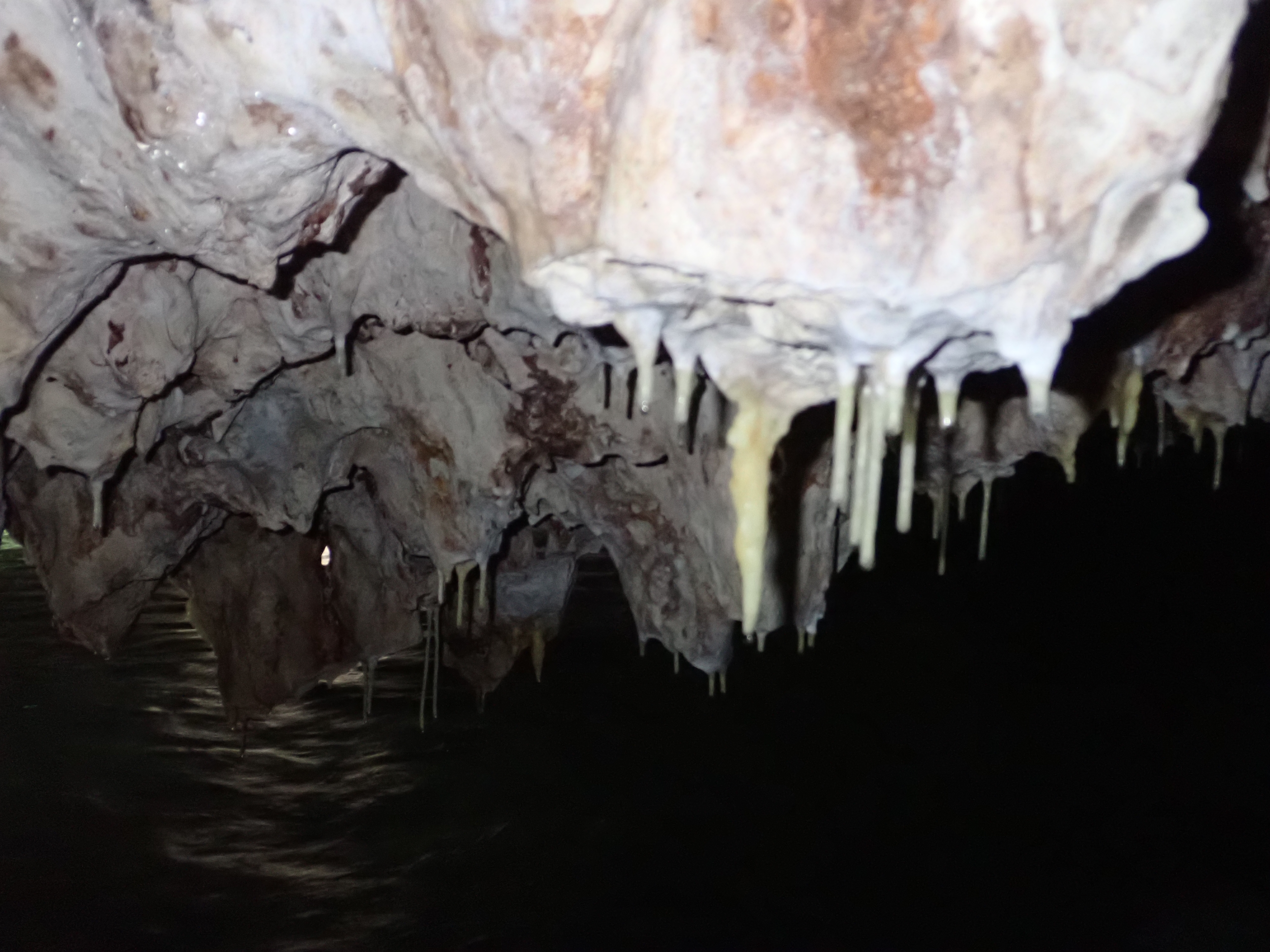
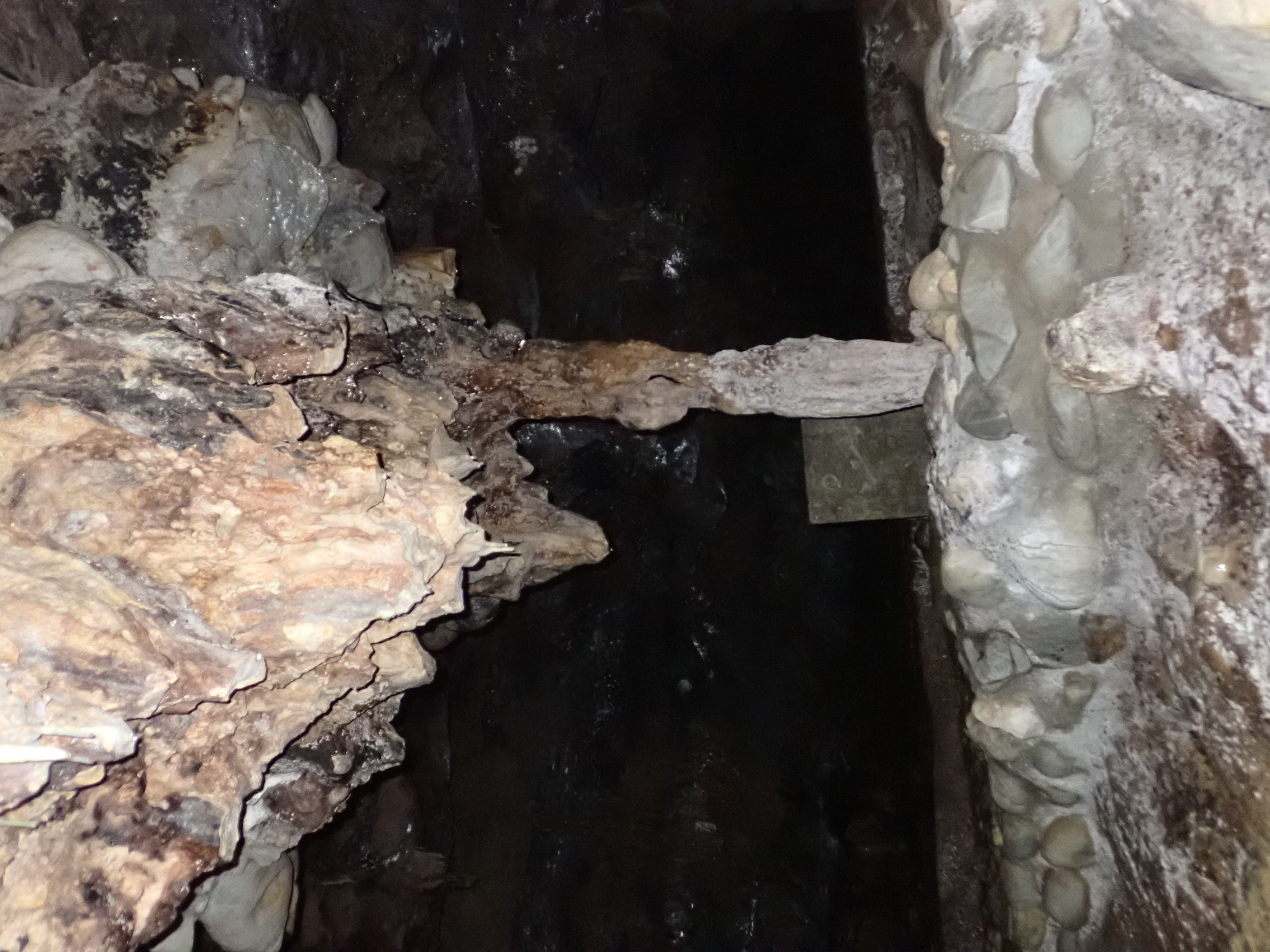
They, however, did not refuse to show us the curiosities of the place. The pointed drup-stones descended from the roof in great numbers, and sometimes met with others which had risen from the ground to meet them. The largest piece of petrifaction that has ever come out of the cavern is in the possession of Mr. Cloete of Constantia. One day in the cave he said to some people that were there along with him, "That is so fine a specimen that I would give a thousand dollars to have it at Constantia".
A boer asked him if he was serious, — he replied he was — he did not believe any one could bring it safe over the Kloof. The boer effected it, and handed it entire at Mynheer's door, much to his sorrow. Had there been the least flaw found in it, he would not have paid the money; but as there was none, and witnesses were present when his offer was made, he was obliged to pay the sum.
Survey Plans


Photos