Flatworms
Peter Swart, April 2026
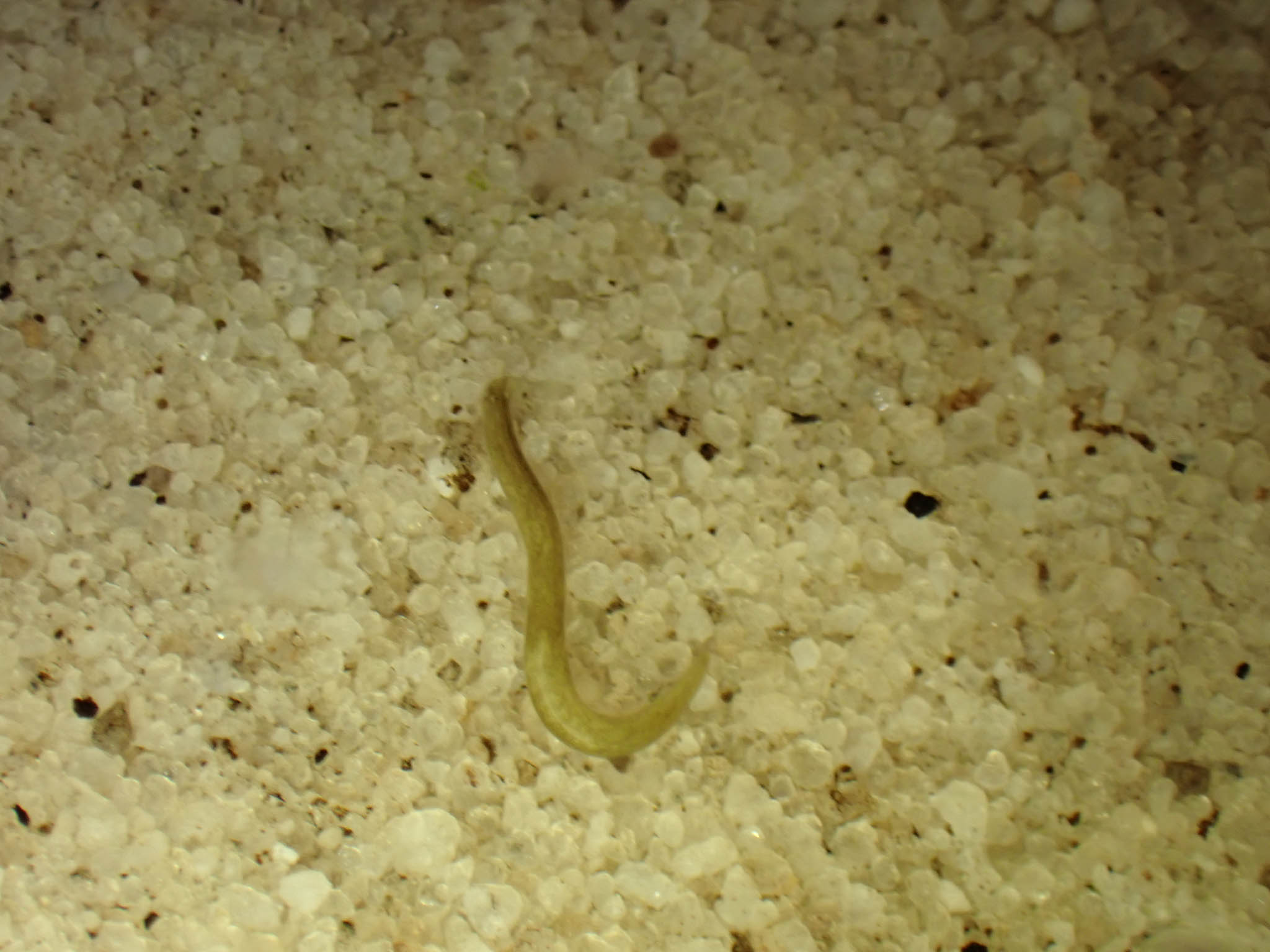
Flatworms found during the Cave Invertebrate Atlas Project. The list is not exhaustive.
Flatworms of the phylum Platyhelminthes are a consistent, though often overlooked, component of cave ecosystems in the Western Cape. Within this phylum, observations from this project fall into the order Tricladida, represented by two ecological groupings:
| Family | Observations | Image |
|---|---|---|
| Terrestrial flatworms in the family Geoplanidae | 4 observations | 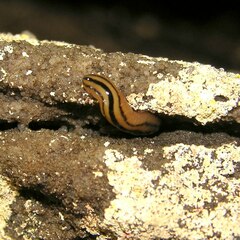 |
| Aquatic flatworms in the family Dugesiidae | 22 observations | 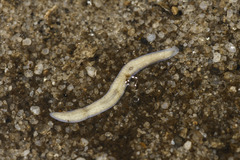 |
Although both groups are present, the dataset is dominated by aquatic taxa. The discussion below therefore focuses on aquatic triclads (primarily Dugesiidae).
Area of Observations
Most records originate from the Cape Peninsula. This spatial bias likely reflects higher observer effort rather than true distribution.
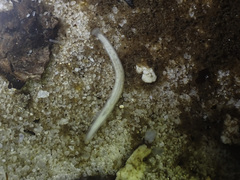
Additional observations attributable to the suborder Continenticola (likely Dugesiidae) have been made in the Groot Winterhoek Mountains. See:
Habitat and Distribution
Many caves in the Western Cape contain seasonal hydrological systems. During winter, active streams flow through these caves; by late summer, these systems typically diminish to isolated pools or dry completely.
Aquatic triclads persist throughout these environments when water is present. Notably, they occur across the full cave light gradient:
| Habitat | Cave | Habitat Description |
|---|---|---|
 |
Aboulia Grotto | Direct sunlight at certain time of the day/year. |
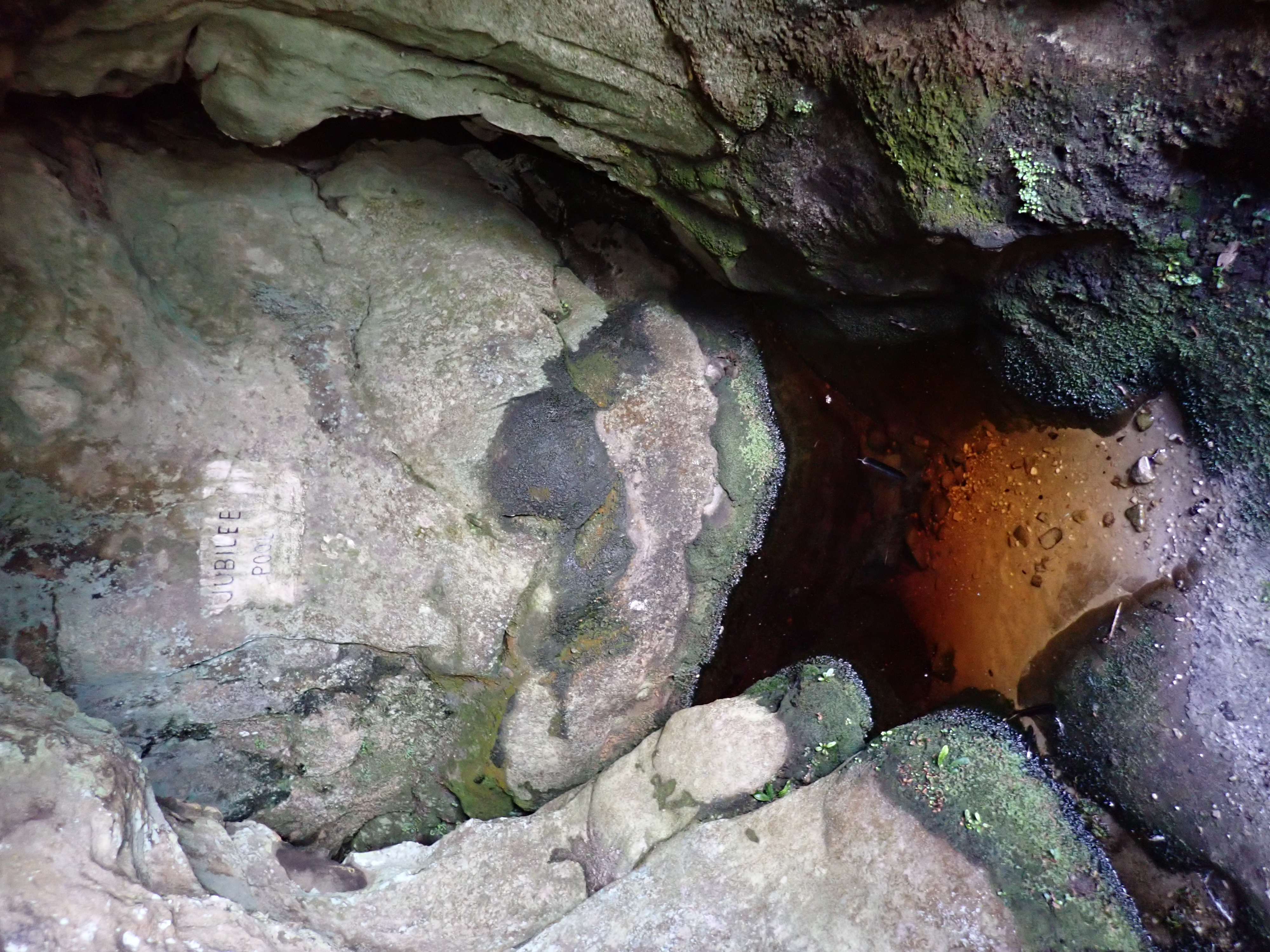 |
Jubilee Grotto, Kalk Bay | Entrance zones (including areas with direct sunlight) |
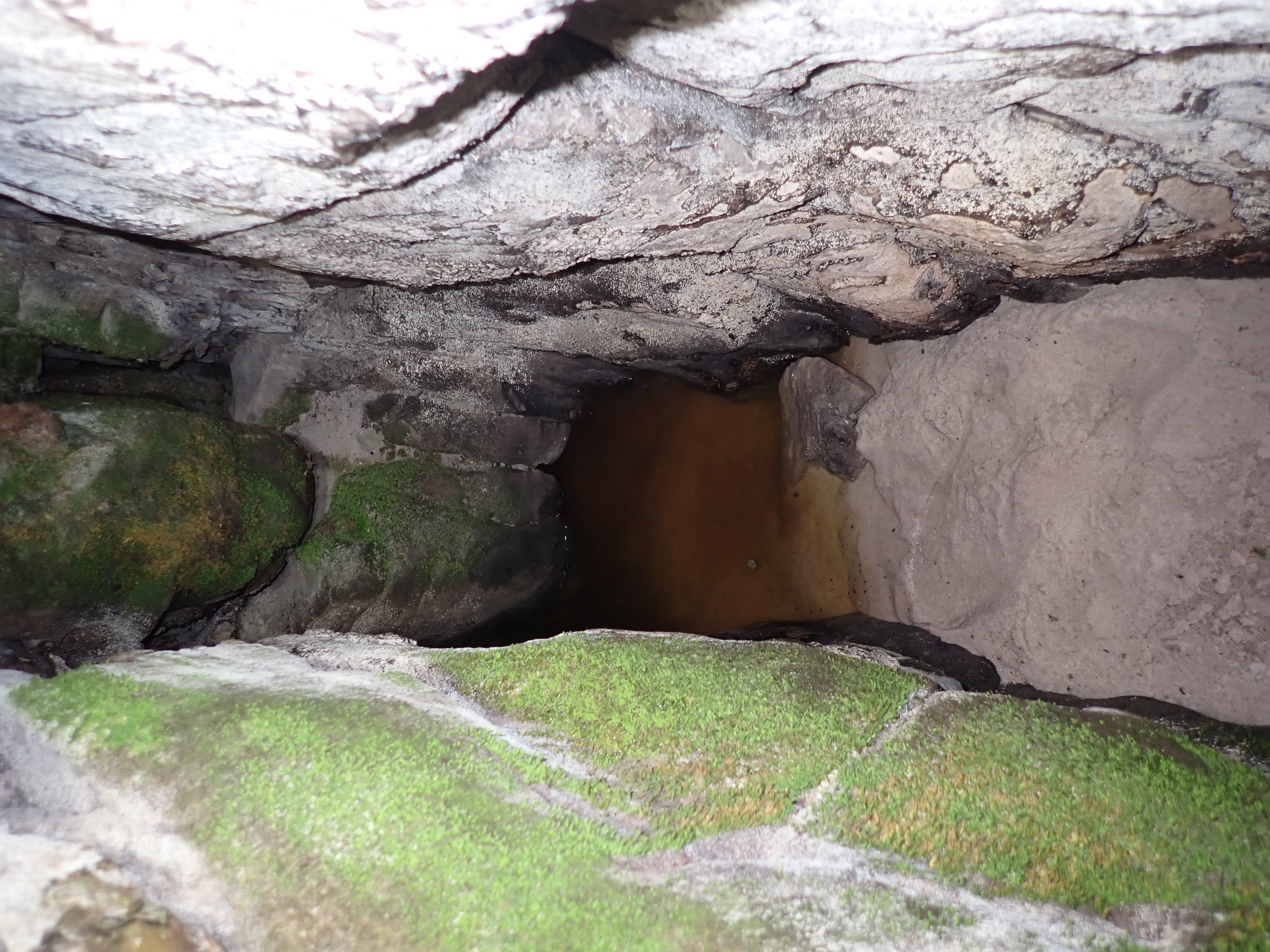 |
Ronan's Well, Kalk Bay | Twilight zones |
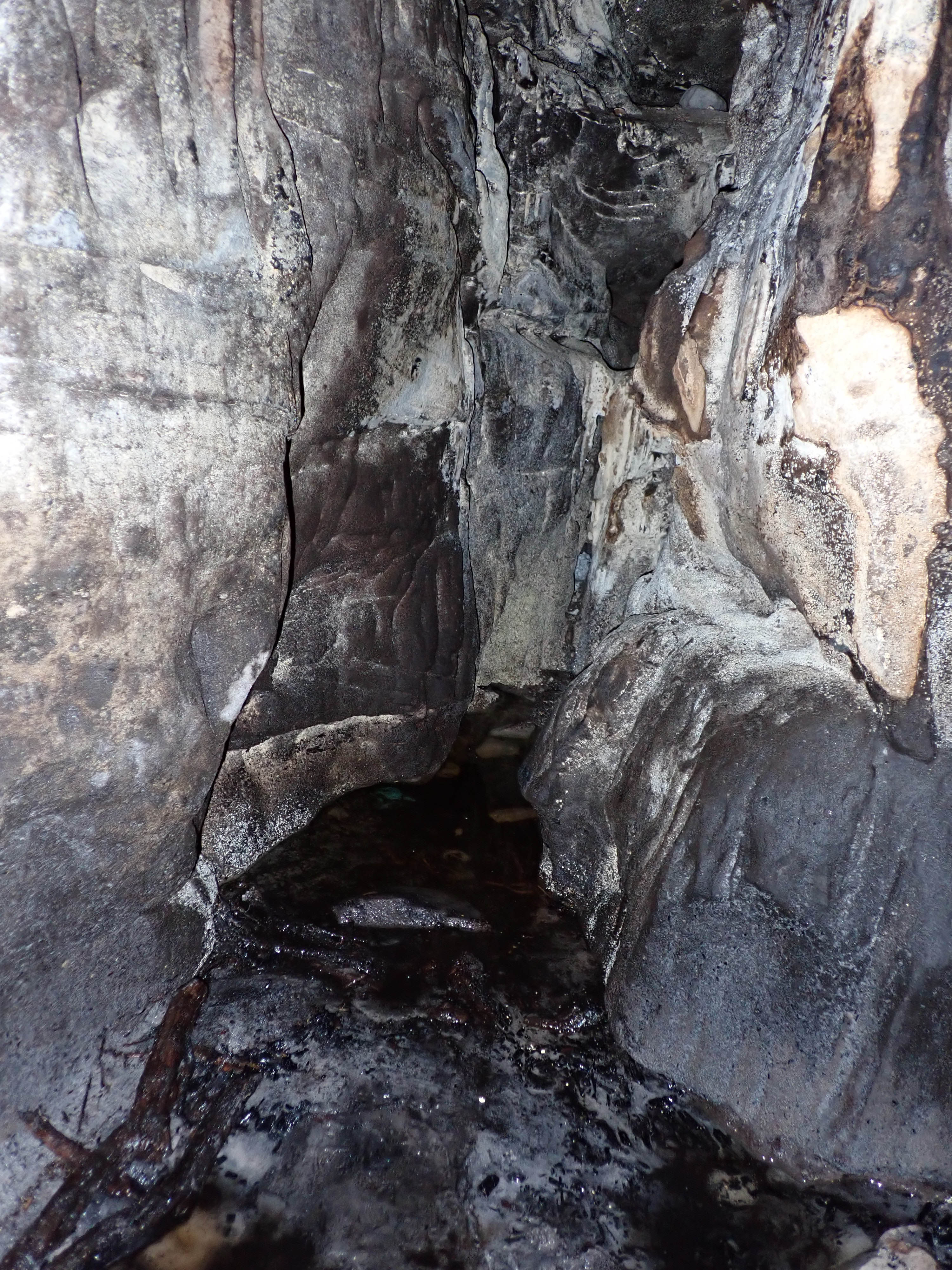 |
Tartarus, Kalk Bay | Deep aphotic zones, extending hundreds of metres from cave entrances |
At Aboulia Grotto, individuals were observed actively swimming in a sunlit entrance pool without any obvious avoidance of light.
In deep dark areas of caves, individuals do not appear to react to torch light in any way. They are not restricted to subterranean habitats and have also been recorded in surface streams.
Morphological Description
The observed aquatic triclads show considerable morphological variation:
- Size: less than 5 mm to approximately 18 mm in length
- Colouration: white, brown, and occasionally black
- Eyes: present in most, but not all, individuals
| Eye placement | Example |
|---|---|
| Dorsal (on the upper surface of the head) | 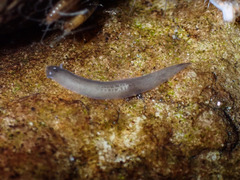 |
| Lateral (on the sides of the head) | 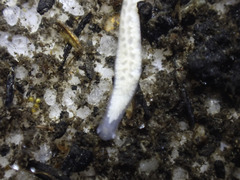 |
This variability is consistent with multiple taxa being present, rather than a single highly variable species.
Behaviour
Behavioural observations align with known triclad ecology:
-
High-flow conditions: Individuals adhere to the underside of submerged rocks. In this state, they contract their bodies and appear as small, soft, greyish masses.
-
Low-flow or still water: More commonly, they are observed swimming in shallow pools (less than 10 cm deep). Locomotion involves smooth gliding or active swimming, with frequent burrowing into fine sediment and re-emerging nearby.
-
Feeding behaviour: A possible case of predation or scavenging was recorded, where a larger individual appeared to consume a smaller one:
-
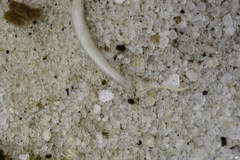
This behaviour is consistent with the opportunistic carnivorous habits typical of Dugesiidae.
Conclusion
The observed variation in size, colour, and eye morphology strongly indicates the presence of multiple species of aquatic triclads in Western Cape cave systems.
Specimens are currently being prepared for DNA sequencing, which should clarify species boundaries and confirm their taxonomic placement within Dugesiidae and related groups.
Photos